
Autumn Gold
8 Pacific Northwest Golf Courses to add to the Bucket List
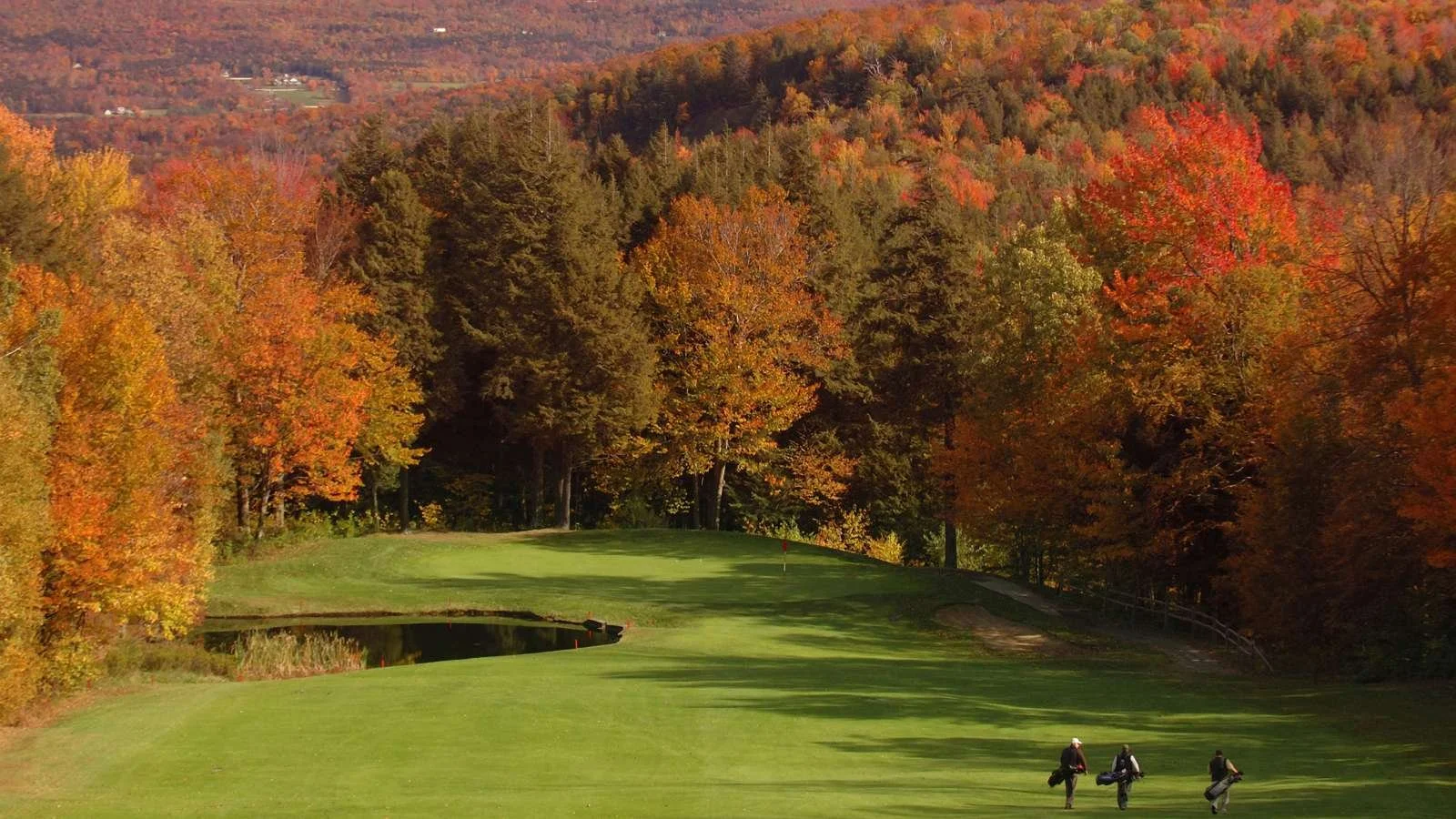
The Pacific Northwest seems made for autumn. Mountainsides turn gold, native grasses fade from green to amber, and the first signs of winter begin appearing on the mountains in the distance. It is a season that changes quickly here.
A September afternoon can still feel like summer. A few weeks later, you are pulling a quarter-zip from the bottom of the bag, checking the forecast for frost delays and wondering how many rounds might be left before winter finally arrives.
That uncertainty is part of what makes the season so good.
Golf in the Pacific Northwest has always been shaped by its landscape, but autumn seems to reveal that landscape more clearly. The greens become greener against yellow leaves and tawny grasses. Morning fog hangs between the trees. Mountains that disappeared into summer haze sharpen against colder skies. And because the Pacific Northwest covers such varied terrain, fall golf can mean remarkably different things depending on where you play.
In British Columbia's Interior, it is dry hillsides turning gold above a deep blue lake. In Whistler, it is fir trees, changing leaves and the first snow appearing high in the Coast Mountains. East of the Cascades, summer-browned grasses frame green fairways. Along the Oregon Coast, autumn arrives through wind, clouds and the Pacific rather than changing leaves.
If autumn golf in the Pacific Northwest is on your bucket list (and it absolutely should be), these eight courses are a good place to start.
GreenTee Country Club Tobiano
Kamloops, BC
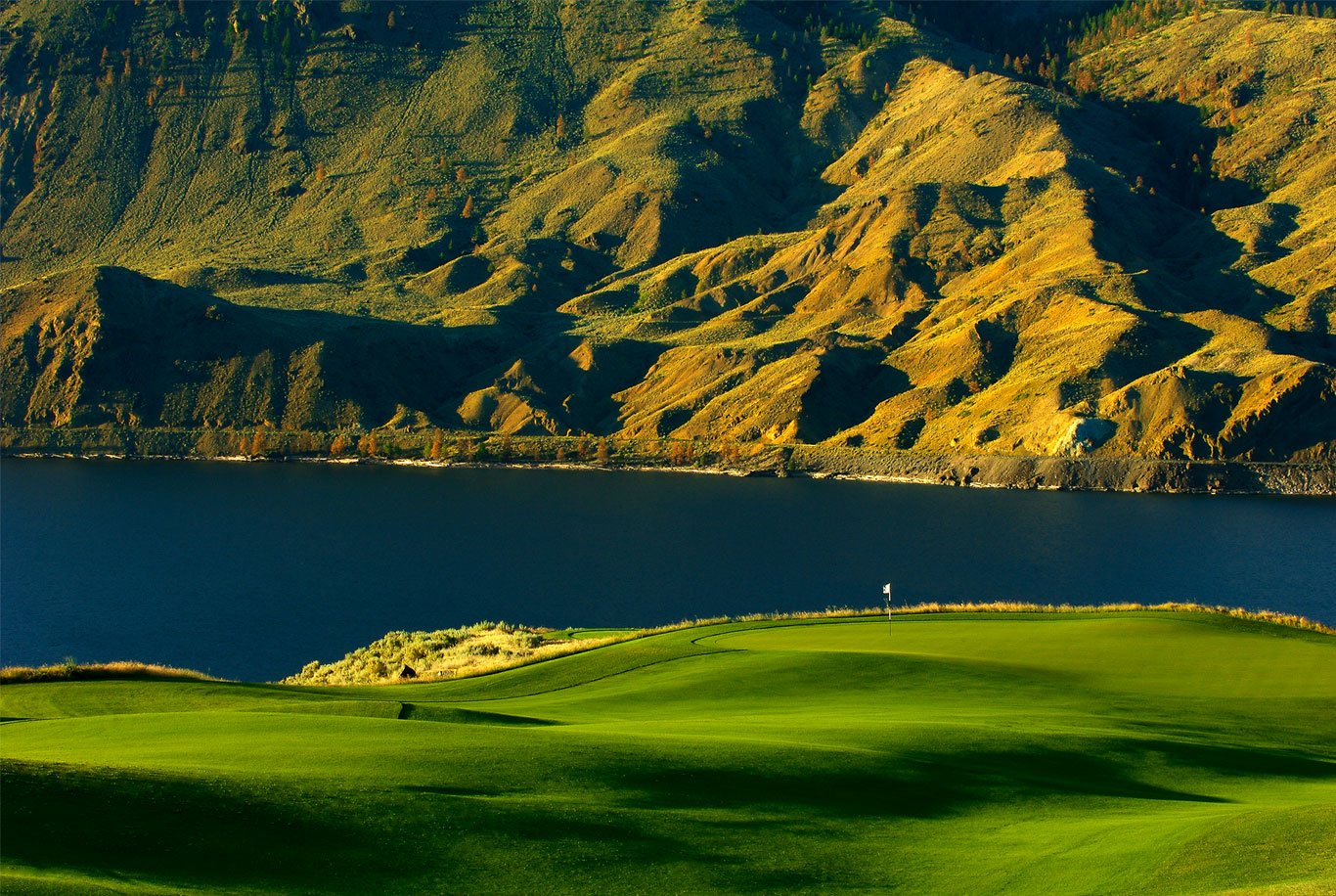
If there is a course that challenges the stereotypical image of Pacific Northwest golf, it may be Tobiano.
There are no dense coastal forests here. Instead, Thomas McBroom's design moves through rugged benchland and natural canyons high above Kamloops Lake, with the water visible from some point on every hole. Autumn might be when that landscape looks its best.
The surrounding hills dry into shades of gold and brown while the fairways remain intensely green. Kamloops Lake provides a strip of deep blue through the landscape, and the lower autumn sun exaggerates every ridge, ravine and contour.
Kamloops itself makes a strong case for a late-season golf trip. The region describes fall as a period of crisp mornings, warmer golden hills and quieter courses after the busiest days of summer have passed.
At Tobiano, that contrast can be spectacular: golf seemingly dropped into the middle of the Interior BC landscape.
Crosswater Club
Sunriver, Oregon
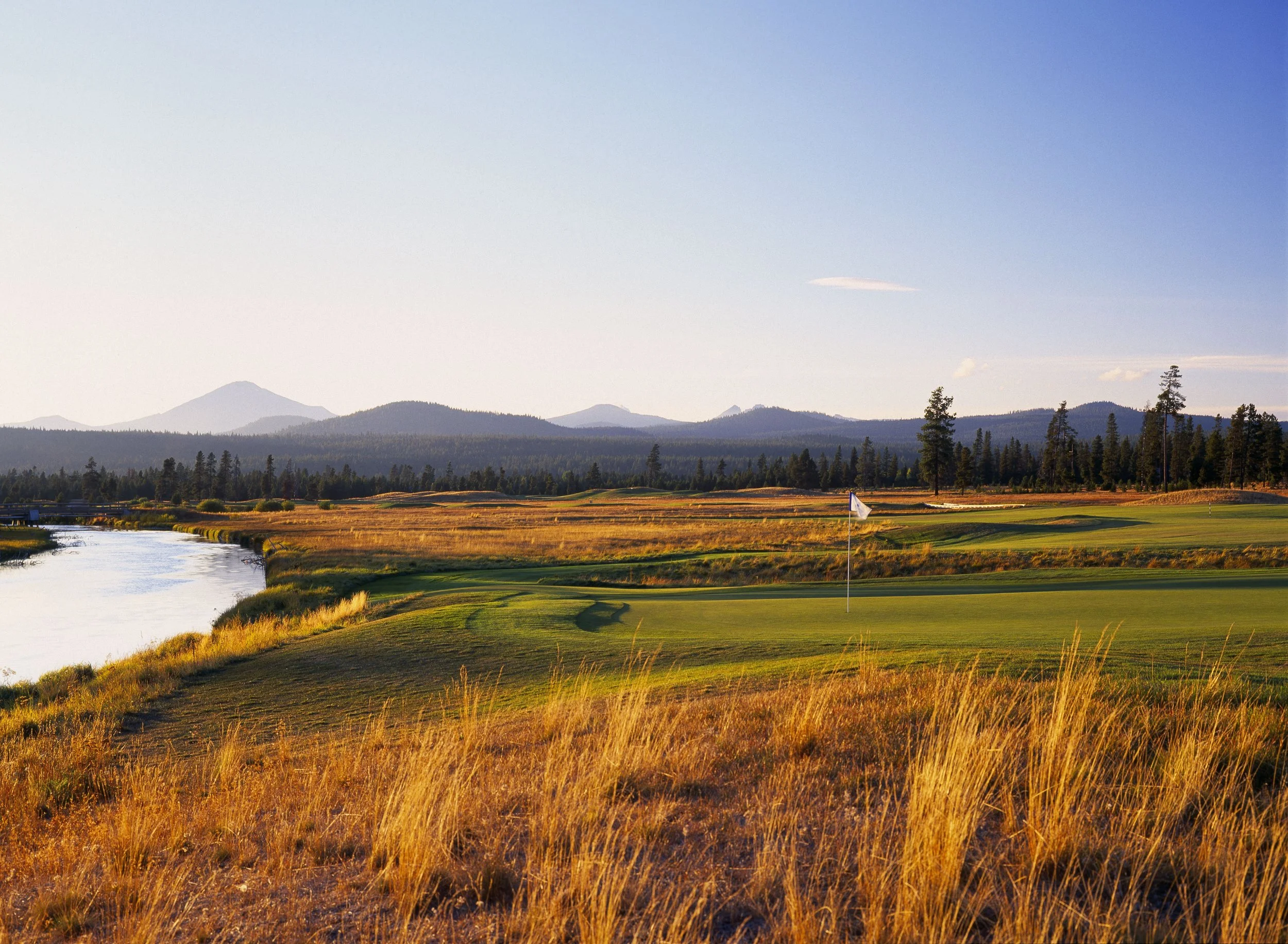
Crosswater represents another version of the Northwest entirely.
Set across 600 acres near Sunriver, the course moves through woodlands and preserved wetlands while repeatedly meeting the Deschutes and Little Deschutes Rivers. Depending on the tees, those rivers can come into play as many as seven times during a round.
In autumn, it becomes the kind of place that makes an early tee time worth the extra layer. Think cool air coming off the river. Mist sitting above the wetlands. Dark ponderosa pines framing fairways while the vegetation closer to the water begins to change.
It is quieter and softer than the drama of Tobiano, but perhaps even more evocative of the season.
Crosswater's season runs into mid October, which means golfers get a brief window to experience the course as Central Oregon begins its transition toward winter.
The Club at Snoqualmie Ridge
Snoqualmie, Washington
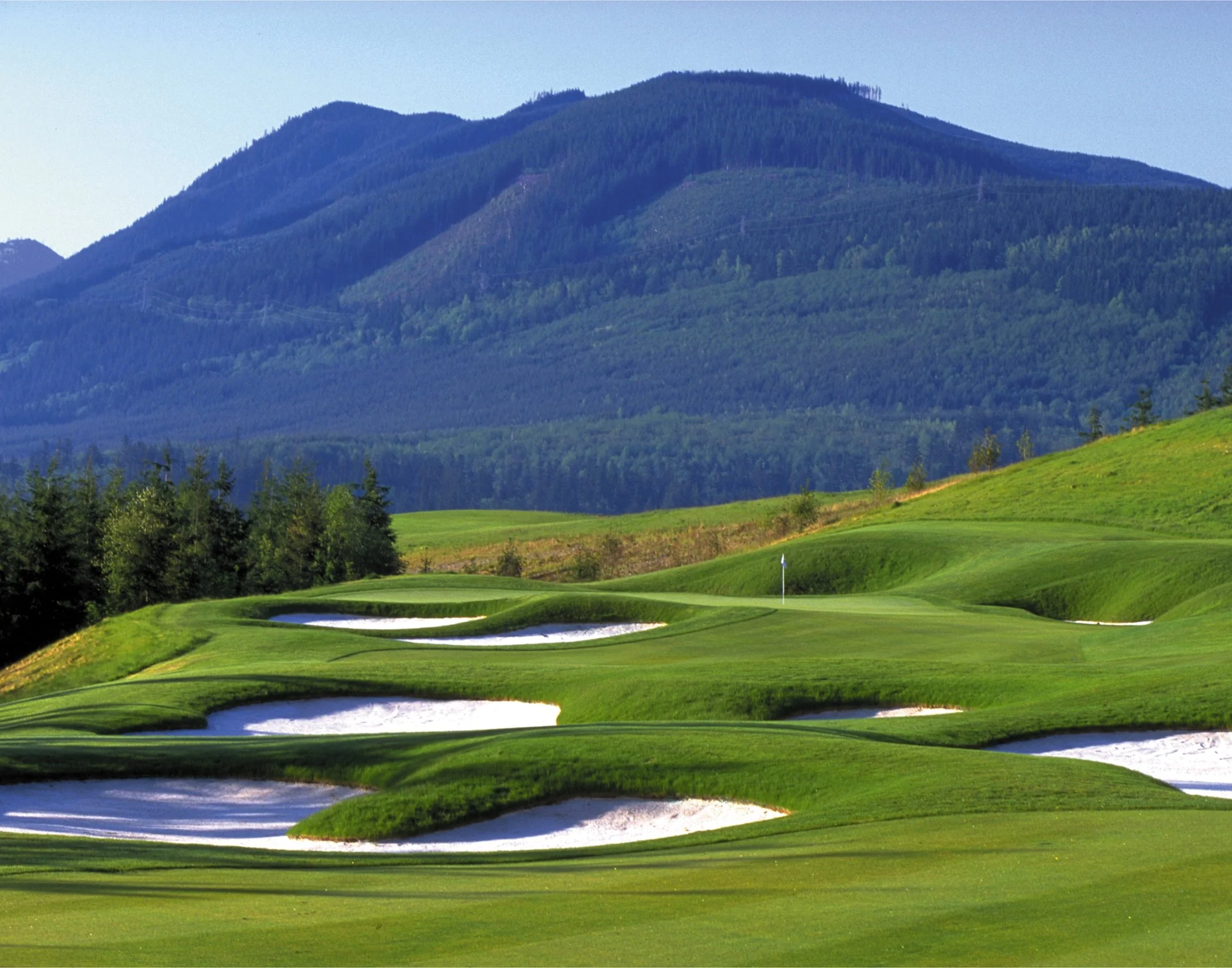
If someone asked you to imagine golf in the Pacific Northwest, there is a good chance you would picture something close to Snoqualmie Ridge.
The Jack Nicklaus-designed course sits in the foothills of the Cascade Range, with panoramic mountain views surrounding the property. The course opened in 1999 and stretches to more than 7,200 yards from the back tees. But in autumn, the numbers matter less than the setting.
Dark evergreen forests sit beneath mountains disappearing into clouds. Pockets of deciduous trees begin to turn. Fairways remain impossibly green against the increasingly muted landscape around them.
On the right day, with low clouds hanging in the Cascades and a little moisture in the air, Snoqualmie feels less like a golf course placed into the landscape than one temporarily revealed within it.
This is the moody side of autumn golf in the Northwest — and arguably the most recognizable.
Bandon Dunes
Bandon, Oregon
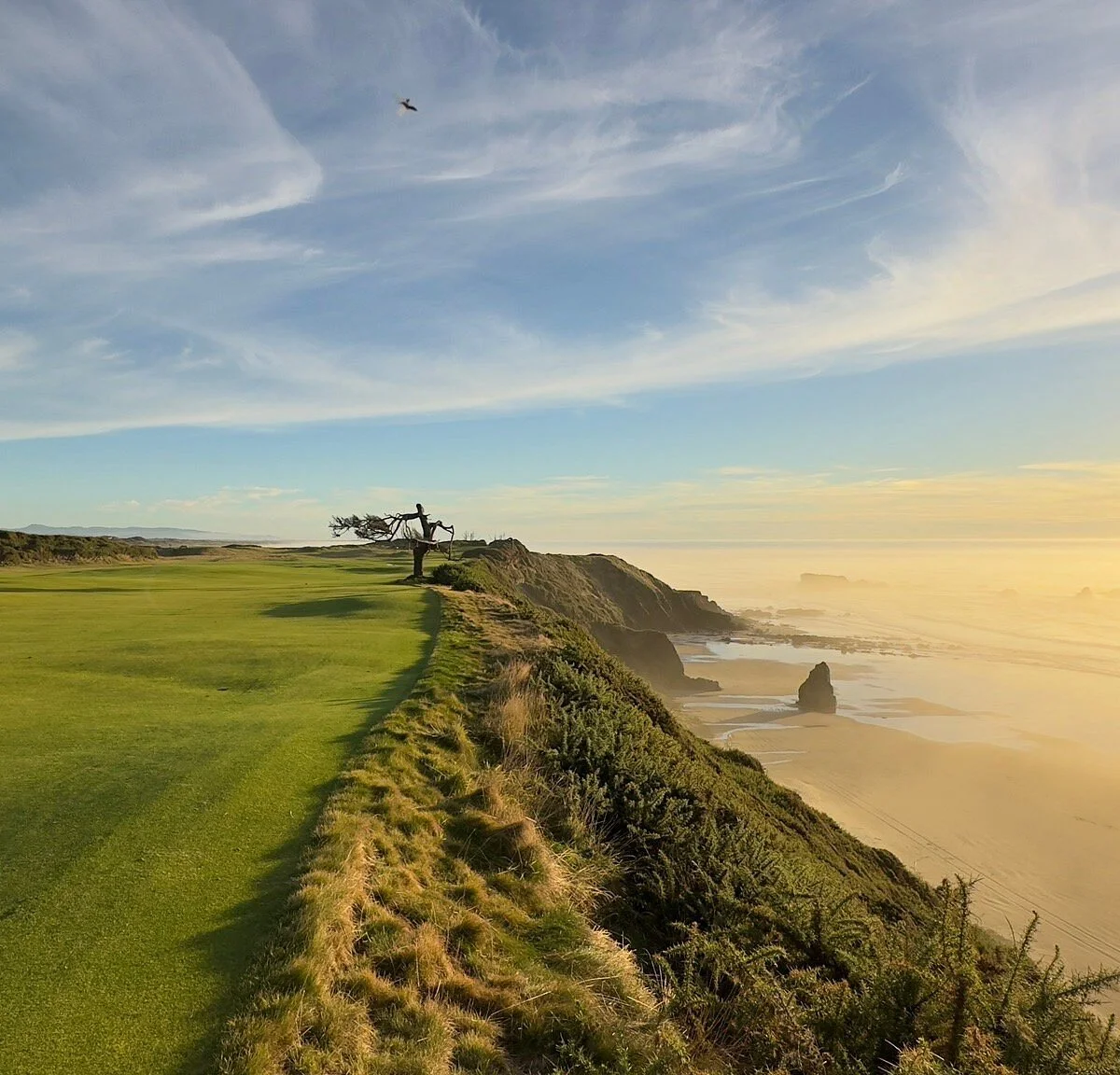
Autumn at Bandon isn't really about leaves. It's about weather.
Bandon Dunes sits high above the Pacific on the rugged southern Oregon coast, where David McLay Kidd's original course moves through native dunes and repeatedly returns golfers to expansive ocean views. Wind and changing conditions are fundamental parts of the experience.
That makes it a particularly interesting inclusion in a collection about fall. The grasses become part of the season's palette, the light changes quickly, and clouds move in from the Pacific. One hole can be bright and calm; several holes later, the wind can completely alter the way the course plays.
There is something distinctly Northwest about that unpredictability.
At Bandon, autumn golf isn't necessarily about catching the perfect day. It's about accepting whatever day the coast gives you.
Wine Valley Golf Club
Walla Walla, Washington
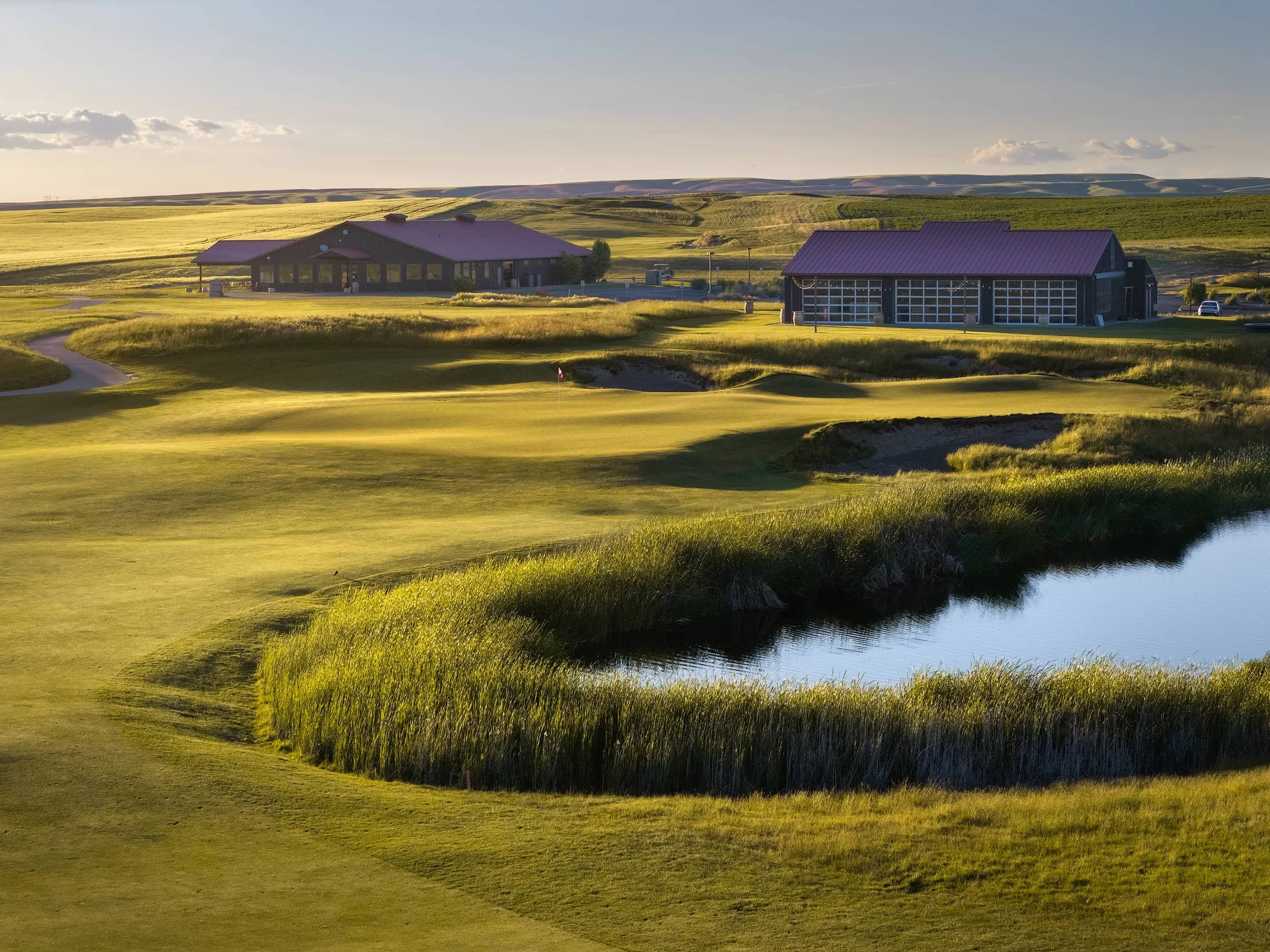
Drive east across Washington and the Northwest changes again.
Wine Valley unfolds across the rolling hills outside Walla Walla, beneath the Blue Mountains. Designed by Dan Hixson, it uses generous fairways, large-scale contours and multiple lines of play across an open landscape that feels far removed from the forests west of the Cascades.
Fall brings the course and its surroundings together. Native grasses take on shades of straw and gold while the maintained playing corridors stay green. The lower sun gives the rolling ground even more definition, and the openness of the property makes the changing light feel enormous.
It is a reminder that the Pacific Northwest isn't one landscape.
Sometimes autumn golf here means mountains and fir trees. Sometimes it means a green fairway running through acres of gold.
Chambers Bay
University Place, Washington
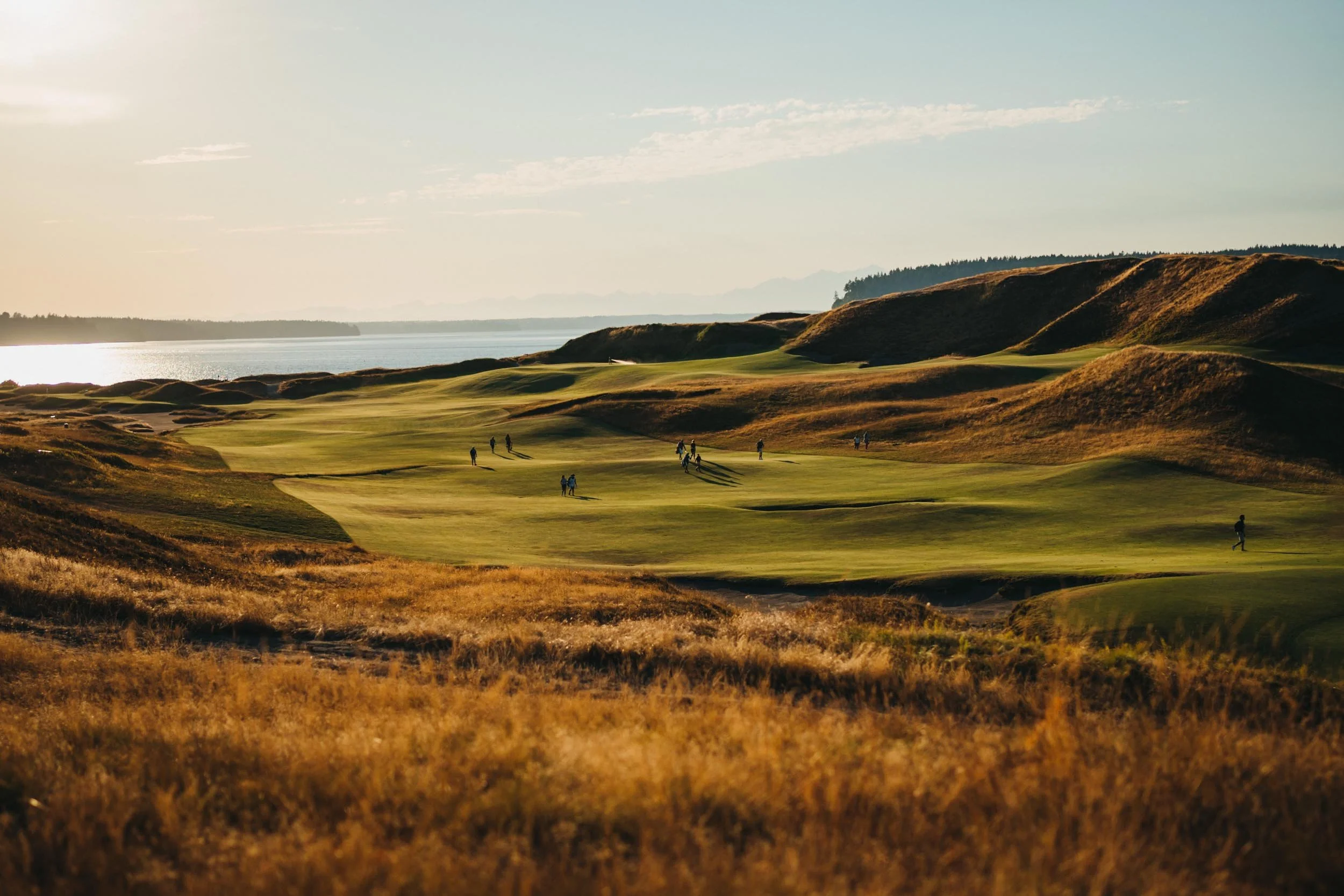
Few courses demonstrate the diversity of Northwest golf better than Chambers Bay.
Built above Puget Sound, Chambers offers something unusual for the region: a genuine links experience in the Pacific Northwest. And fall suits it.
The grasses surrounding the playing corridors begin to take on warmer tones. The sun sits lower over the Sound. The Olympic Mountains can appear across the water on clear days, while grey skies and wind can transform the course entirely on others.
Like Bandon, Chambers doesn't need red and yellow leaves to feel autumnal. Its version of the season is more restrained: muted grasses, colder blue water, long shadows and that unmistakable Northwest sky.
Better still, the golf season doesn't simply end when summer does. Chambers publishes rates throughout October, November and December — fitting for a course where embracing the elements is part of the point.
Fairmont Château Whistler Golf Club
Whistler, British Columbia
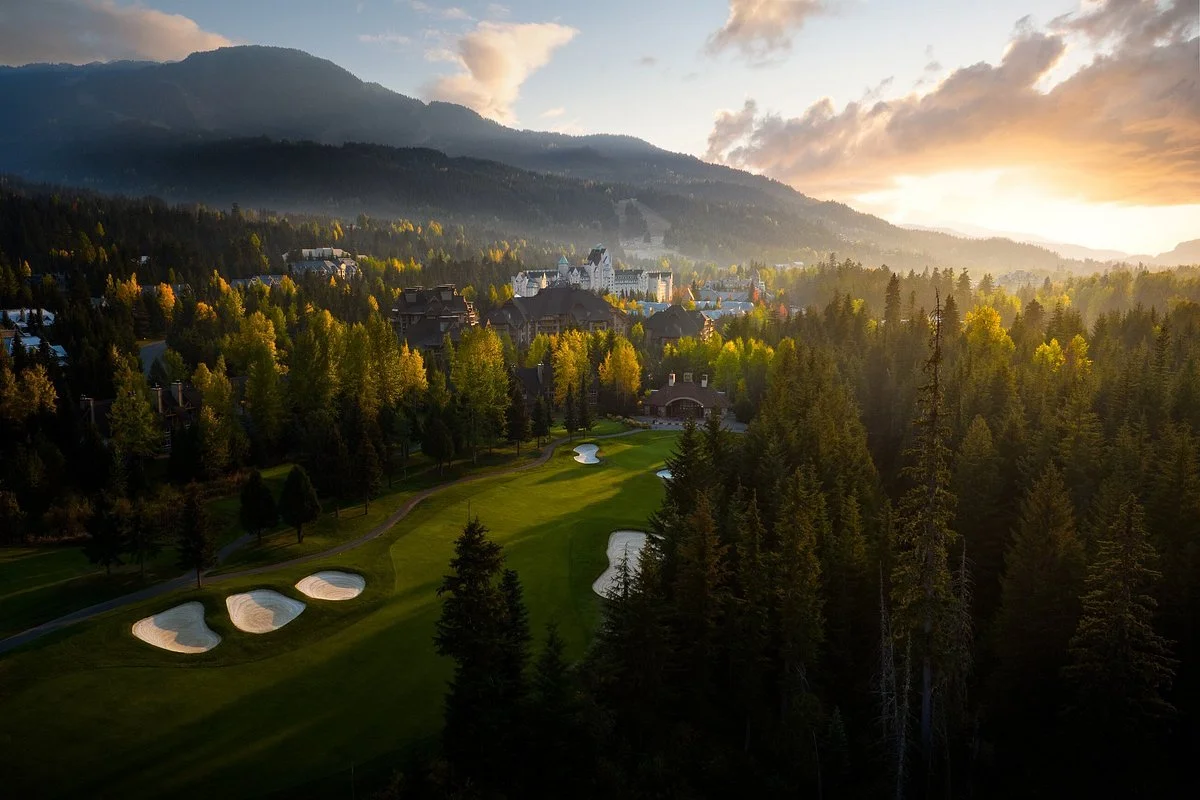
Whistler in October can feel caught between seasons. Down in the valley, autumn is still unfolding. Higher up, winter is beginning to arrive.
The Fairmont Château Whistler Golf Club sits directly in that transition. Robert Trent Jones Jr. routed the course into the flank of Blackcomb Mountain, moving through creeks, ponds, granite rock and stands of old Douglas fir while climbing and falling more than 400 feet across the property.
By fall, the contrast can be remarkable. Yellow leaves appear among the evergreens. The air becomes noticeably colder. Mountains loom above the fairways, sometimes carrying the first dusting of snow. And the clock is ticking on a golf season that end is early October.
Perhaps that is exactly why a late-season round in Whistler feels so good. You know it won't last.
Nicklaus North Golf Course
Whistler, British Columbia
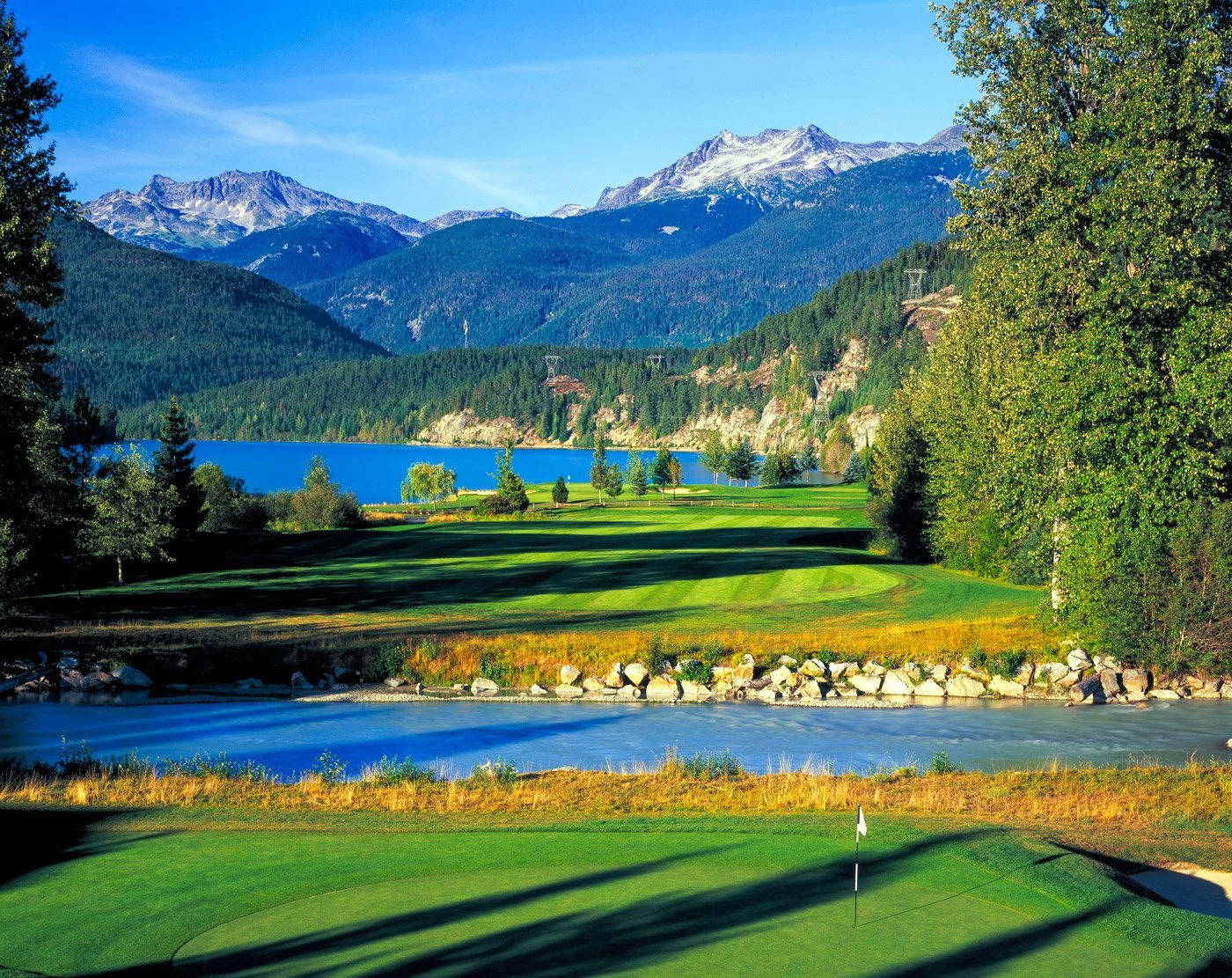
Only a few minutes away from Fairmont Château, Nicklaus North offers another interpretation of autumn in the same valley.
Rather than climbing the mountain, Jack Nicklaus's par-71 design moves along the valley floor beside Green Lake and the River of Golden Dreams, surrounded by fir trees and glacial mountain views.
In summer, it is undeniably beautiful. In autumn, it gains another layer.
The lake reflects colder skies. Leaves turn along the edges of the property. Snow begins appearing on the surrounding peaks while golfers are still walking green fairways below.
The course's 2026 season extends into early October, leaving a small window when golf and winter seem to occupy the same landscape at once.
It may be one of the most distinctly Canadian golf scenes of the season.
Nicklaus North - a Jack Nicklaus Signature Design - feels like an appropriate place to end this journey. The Golden Bear also designed The Club at Snoqualmie Ridge, another course on this list, and once said of that Washington course:
“I believe whenever possible, golf should be played at a pretty place. If I can design a course to accomplish that and still create some great holes, so much the better. ”
It was a comment about Snoqualmie, but it could just as easily describe the philosophy behind Nicklaus North — or, in some ways, each of the courses on this list.
Because in the Pacific Northwest, the landscape has always been part of the game. And perhaps no season makes that more apparent than autumn.
But it won’t last. A perfect October afternoon feels borrowed. You notice the light because there is less of it. You appreciate the warmth because the morning started cold. You look at the mountains and realize that, before long, the golf season in much of the region will give way to something else.
From the dry hills above Kamloops Lake to the Coast Mountains of Whistler, from the Cascades to the high desert and finally the Oregon coast, autumn doesn't look the same across the Pacific Northwest.
That's exactly the point. The season changes the landscape. The landscape changes the golf. And for a few short weeks, the two seem perfectly matched.
