
A Sunday Morning in the Trees
Burnaby Mountain Golf Course
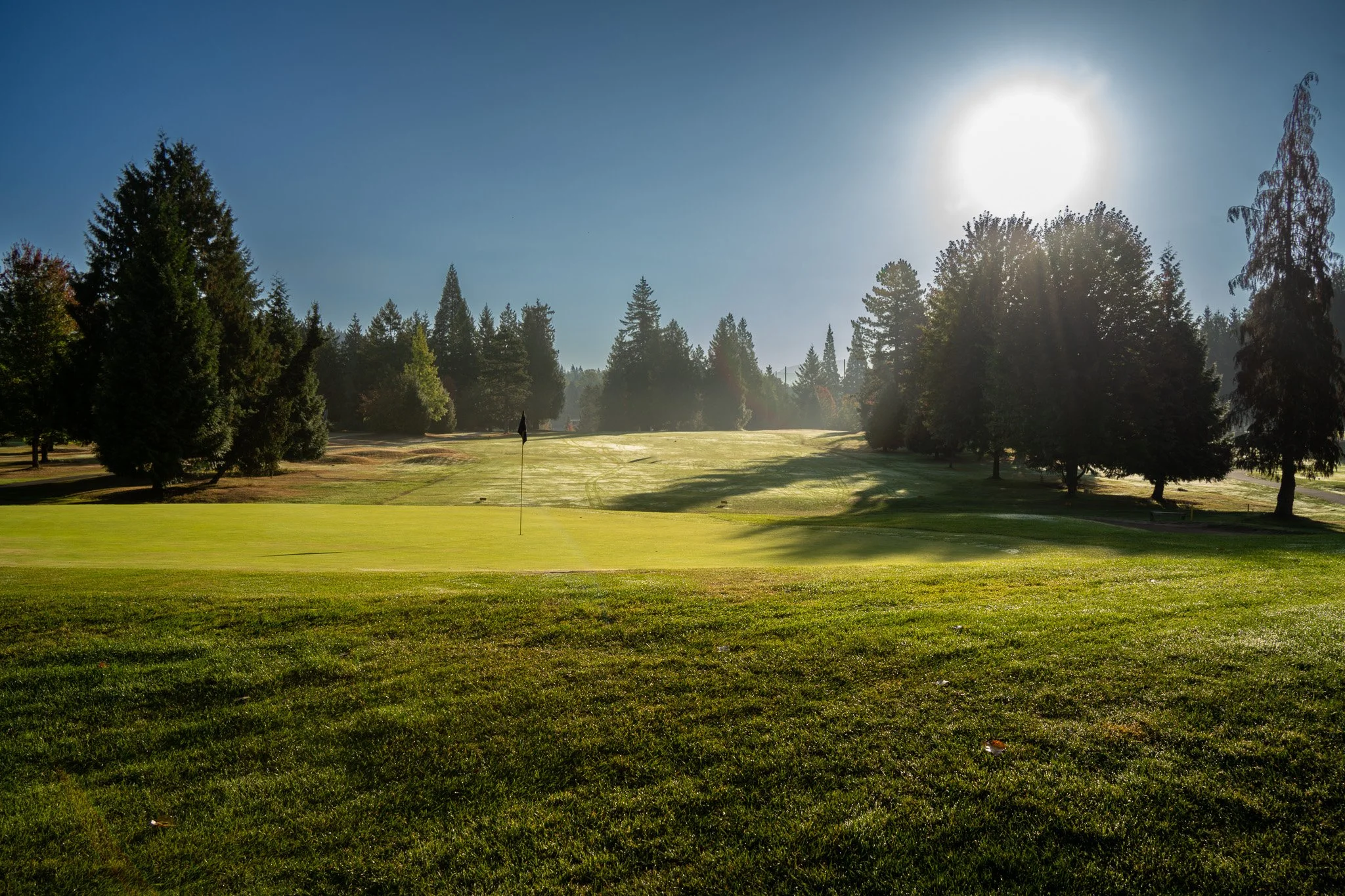
Burnaby Mountain Golf Course
There is something about the first few weeks of fall that feels particularly suited to golf in the Pacific Northwest. The mornings arrive a little colder. The sun sits lower. Fairways hold the night's moisture well into the opening holes, and for an hour or two after sunrise, every footprint through the rough leaves a trail in the dew.
On a clear Sunday morning in late September, Burnaby Mountain Golf Course is exactly that kind of place. Tucked against the lower slopes of Burnaby Mountain in north Burnaby, the course feels surprisingly removed from the city around it. Mature firs, cedars and deciduous trees define much of the property, filtering the early light and framing fairways that rise, fall and disappear around corners.
Arrive early enough and the place is remarkably still. The sun begins working its way through the trees. The fairways glow where the light reaches the dew and remain dark green where it doesn't. A few golfers make their way toward the first tee. Somewhere in the distance, the range has already started its steady rhythm of golf balls being struck into the morning.
It feels like Sunday golf.
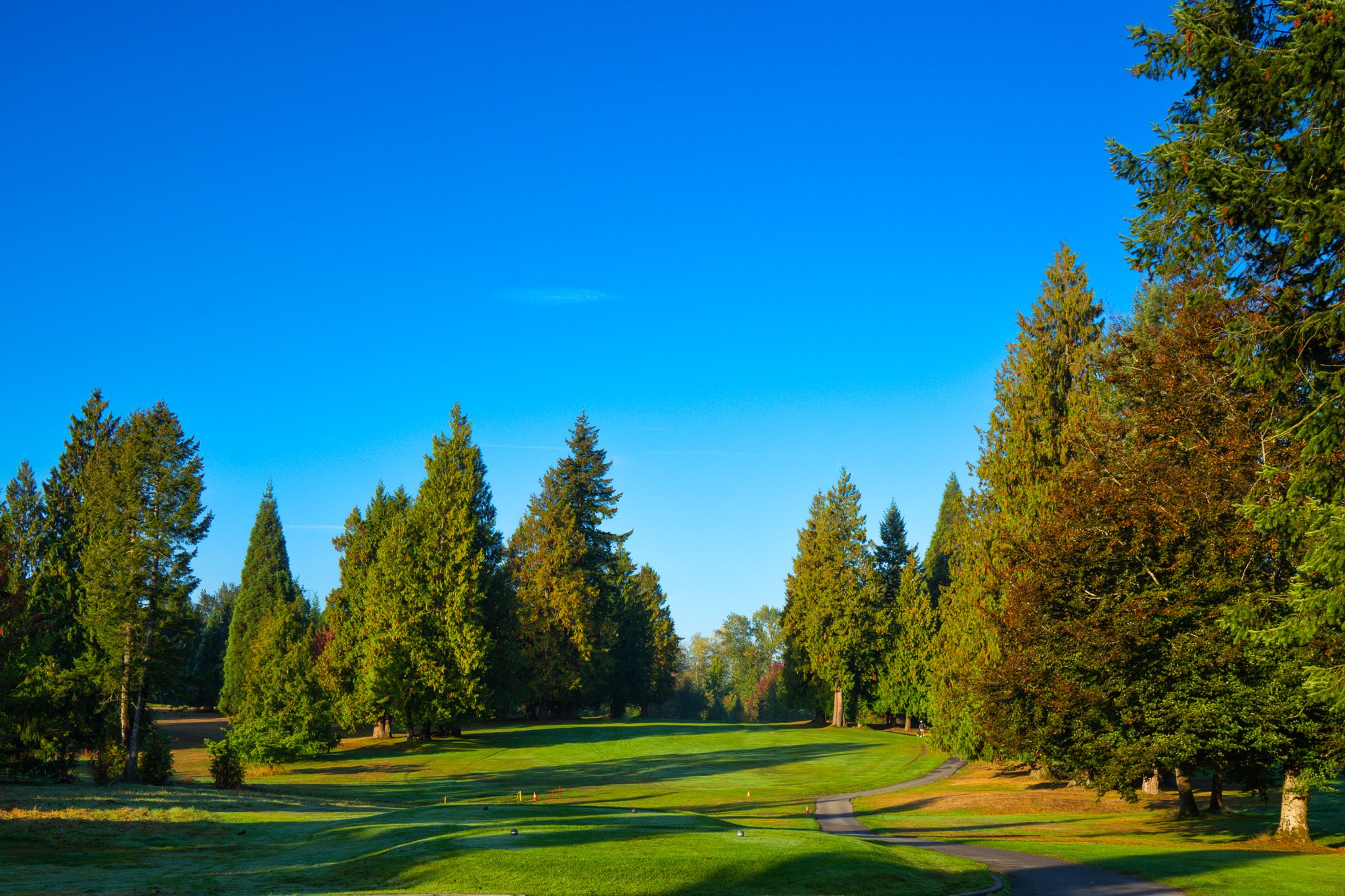
Hole 1
A municipal course with history
Burnaby Mountain was the City of Burnaby's first municipal golf course.
Construction began in September 1965, with the course designed by British Columbia golfer and course designer Ernest “Ernie” Brown. The project proved considerably more difficult than originally anticipated. The property had little of the topsoil required for finishing fairways and greens, while Burnaby's rainfall required drainage to be incorporated throughout the course. The project stretched several years before Mayor Bob Prittie officially opened Burnaby Mountain in May 1969.
The course that opened wasn't quite the course originally envisioned. Unfinished ravines meant it initially played only 5,228 yards, considerably shorter than the roughly 6,500-yard layout planned by its architect. Over the decades, the property continued to evolve: the nines were eventually reversed, irrigation and drainage improved, cart paths added and playing surfaces modernized. More than 55 years later, its fundamental character remains wonderfully straightforward.
There are no gates to pass through and no attempt to manufacture grandeur. Burnaby Mountain is one of two full-length municipal courses operated by the City of Burnaby, alongside Riverway, and it continues to occupy an increasingly valuable piece of green space within Metro Vancouver. That accessibility is an important part of what makes the place work.
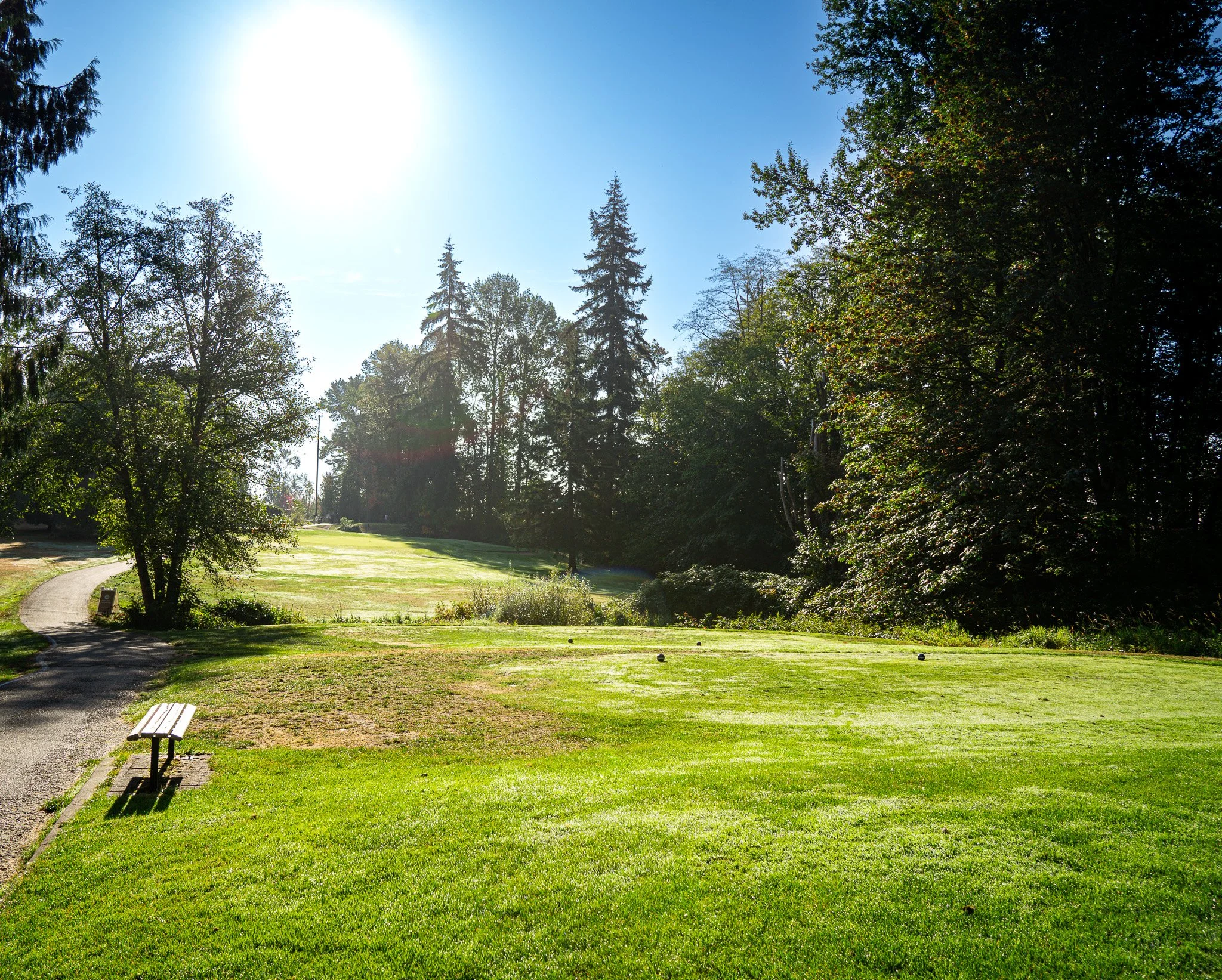
Hole 4
The golf course
Burnaby Mountain is a classic parkland layout: mature trees, relatively generous landing areas, rolling terrain and greens that generally reveal themselves without excessive trickery.
Depending on the tees, the course plays roughly 5,800 to 6,400 yards, with the back tees stretching to 6,431 yards at par 71. On paper, that doesn't sound particularly intimidating. And from many tee boxes, it isn't. The course gives you room. There are plenty of holes where a recreational golfer can stand over the driver without feeling as though anything less than a perfect swing will end the hole. But Burnaby Mountain's difficulty reveals itself gradually.
The trees matter. So does elevation. Fairways tilt. Approaches can come from uneven lies. Greens often contain more movement than you initially see. And while the course isn't especially long by modern standards, several of its par fours ask for two genuinely good golf shots.
The result is a course that can be forgiving without being easy. A newer golfer can move around Burnaby Mountain without being beaten up for four hours. A stronger player, meanwhile, still has to position the ball properly and hit precise approaches to make a lot of pars.
It is less about surviving the golf course than solving it.
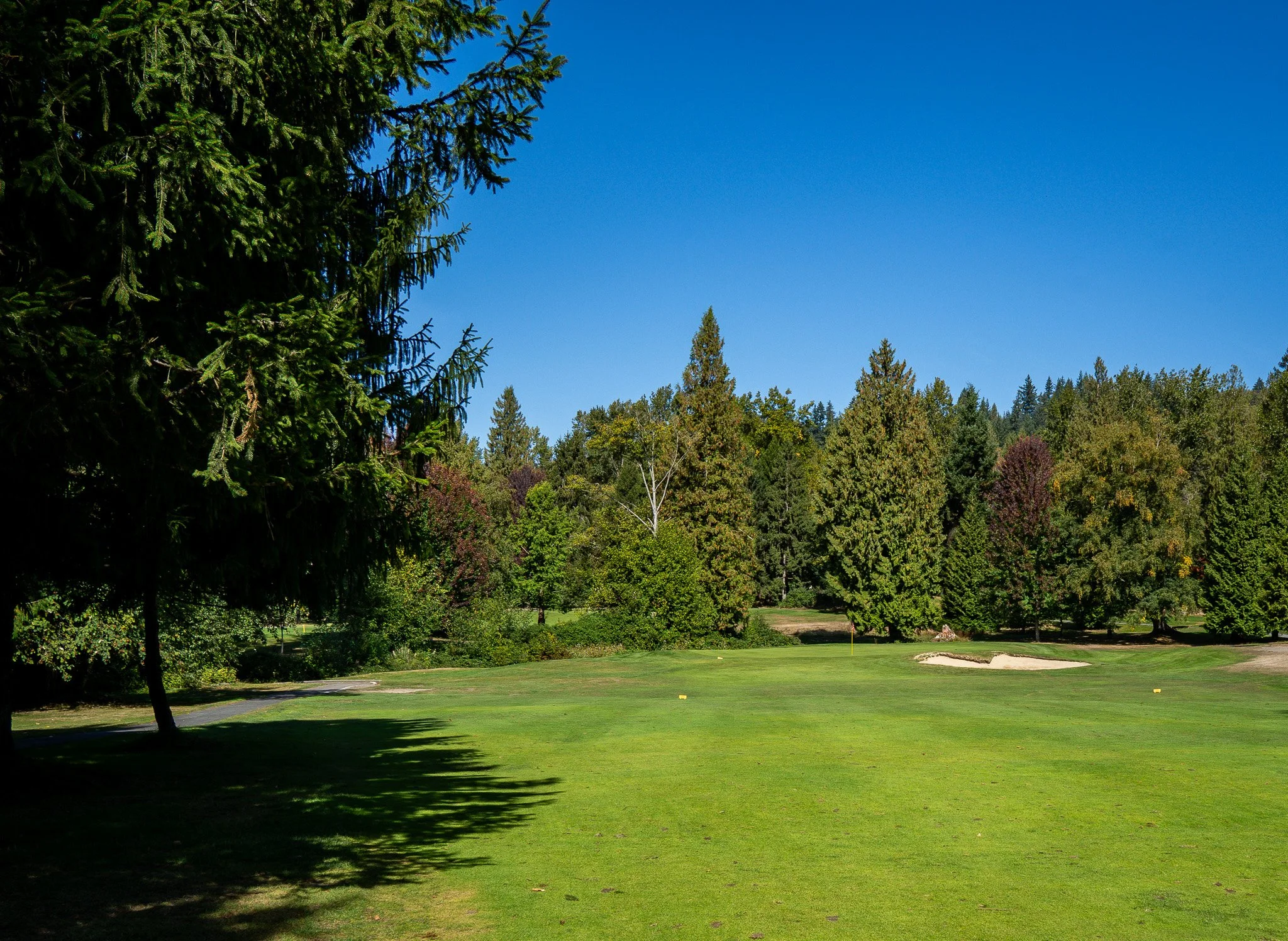
Hole 17
Where things gets interesting
The personality starts to emerge early. The opening hole is a relatively gentle par 5, but by the Third, Burnaby Mountain begins asking more interesting questions. At 505 yards from the back tees, No. 3 is another par 5, this time with water protecting the front of the green. The sensible play is generally to turn it into a three-shot hole; even the course's own playing notes discourage trying to reach in two. It's a good example of Burnaby Mountain's design philosophy. The challenge isn't created by enormous length. It's created by asking the golfer to make a decision.
The Eighth is a different proposition altogether. At 404 yards from the back tees, it carries the No. 1 handicap designation. A creek threatens the right side while trees punish the opposite miss, tightening the visual corridor from the tee. This is where the otherwise comfortable width of Burnaby Mountain begins to feel considerably smaller.
Then comes a demanding stretch around the turn. The 10th and 11th are consecutive par fours of roughly 400 yards from the back tees, with No. 10 in particular earning a reputation as a hole where bogey is hardly a disaster.
But perhaps the clearest example of the course's understated difficulty comes later.
Fourteen stretches to 439 yards from the back tees and plays uphill, with the terrain making an already long approach feel longer. It is rated the second-hardest hole on the card.
Nothing about these holes is particularly theatrical. That's part of the charm. Burnaby Mountain doesn't need enormous water features, dramatic bunkering or forced carries on every hole. Much of the challenge comes from the land, the trees and the simple requirement to keep hitting good golf shots.
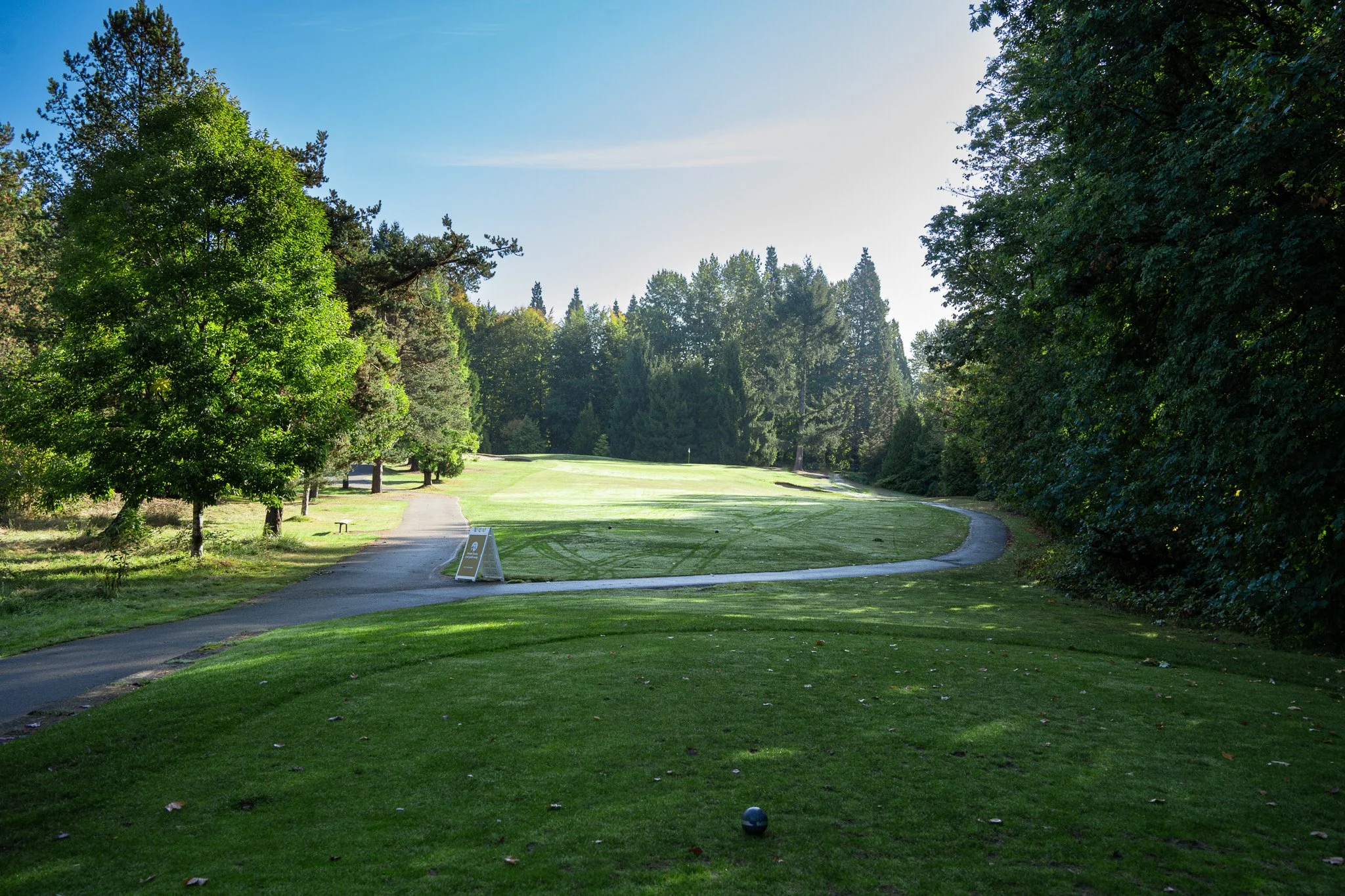
Hole 6
Golf in the trees
What may linger longer than any individual hole, though, is the setting.
Burnaby Mountain isn't wilderness golf. Roads appear. Homes aren't far away. The city is still there. But the mature tree corridors create little pockets where it disappears.
Standing on certain tee boxes, you're looking through walls of cedar and fir toward a strip of fairway catching the morning sun. Elsewhere, branches hang over the edges of the playing corridors and shadows stretch halfway across the short grass.
In September, the first hints of orange and red begin appearing among all that green. This is where Burnaby Mountain feels most distinctly like golf in Cascadia. Not because it's dramatic. Because it feels familiar.
Burnaby Mountain isn't trying to be anything more than what it is: good, honest municipal golf in a setting that feels unmistakably like home. More than fifty years after the first tee shot was struck here, that's still more than enough reason to keep coming back.
Learn more about the course or book a tee time here Burnaby Mountain Golf Course
