
There's an App for That
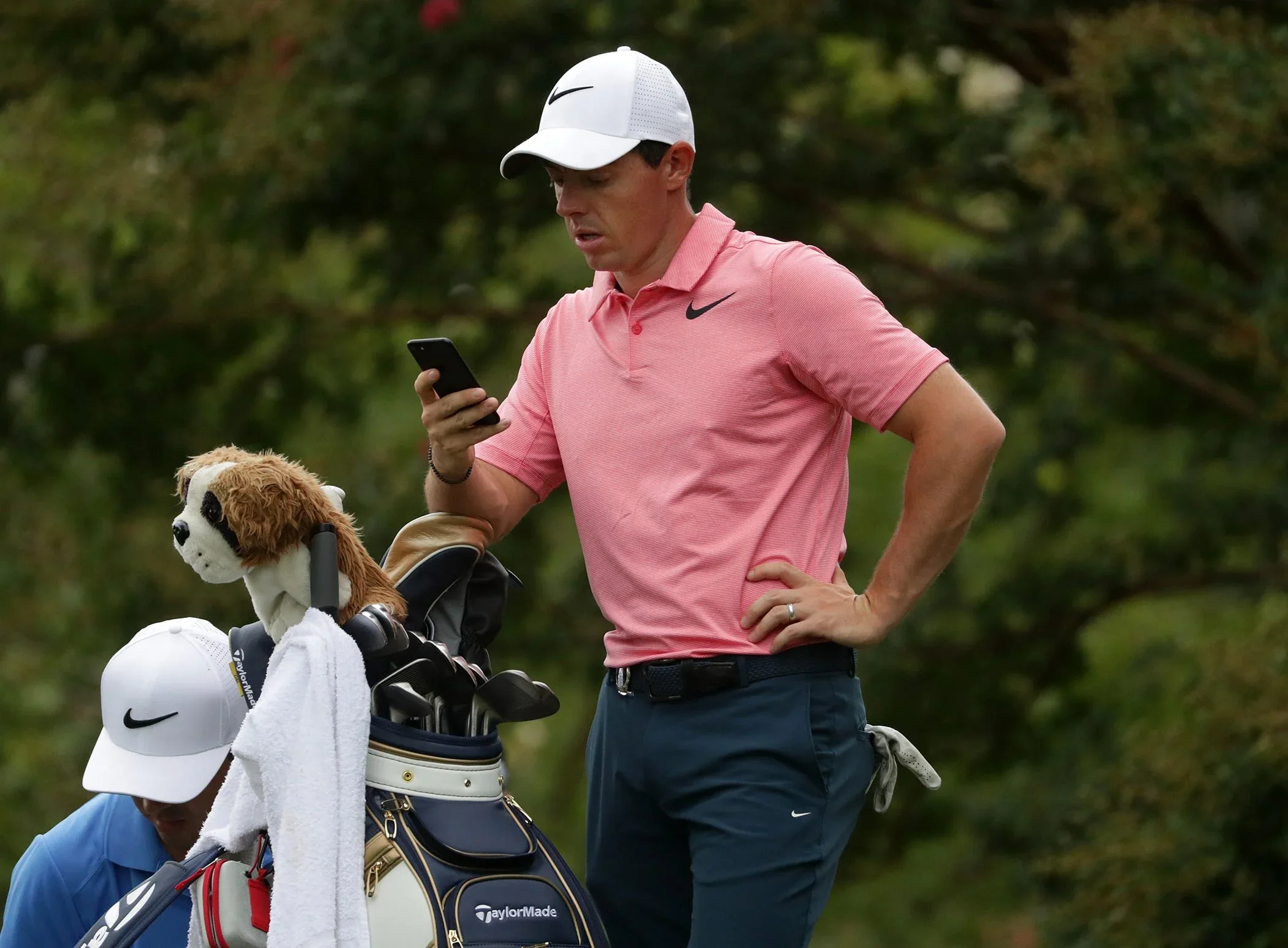
Golf has never been more connected. From GPS and shot tracking to artificial intelligence and swing analysis, we explore five apps changing how golfers understand their games — and ask whether more information really leads to better golf.
There was a time when the most sophisticated piece of technology in the average golfer's bag was a rangefinder. Before that, it might have been a yardage book, a pencil, and a reasonably confident guess about how far the seven-iron would travel.
Today, things look rather different. The golf technology market has expanded well beyond basic GPS and digital scorecards.
Your phone can tell you how far you are from the front, middle and back of the green. Your watch can record the shots you hit without you touching a button. Sensors can calculate how far you actually hit every club, rather than how far you remember hitting it that one perfect afternoon. And artificial intelligence can now analyze your golf swing, reconstruct your body movements in three dimensions, and offer suggestions about what you should change.
It's an extraordinary amount of information to have available during a round of golf. But there's a question worth asking. Are we actually becoming better golfers, or have we simply become better at measuring how we play?
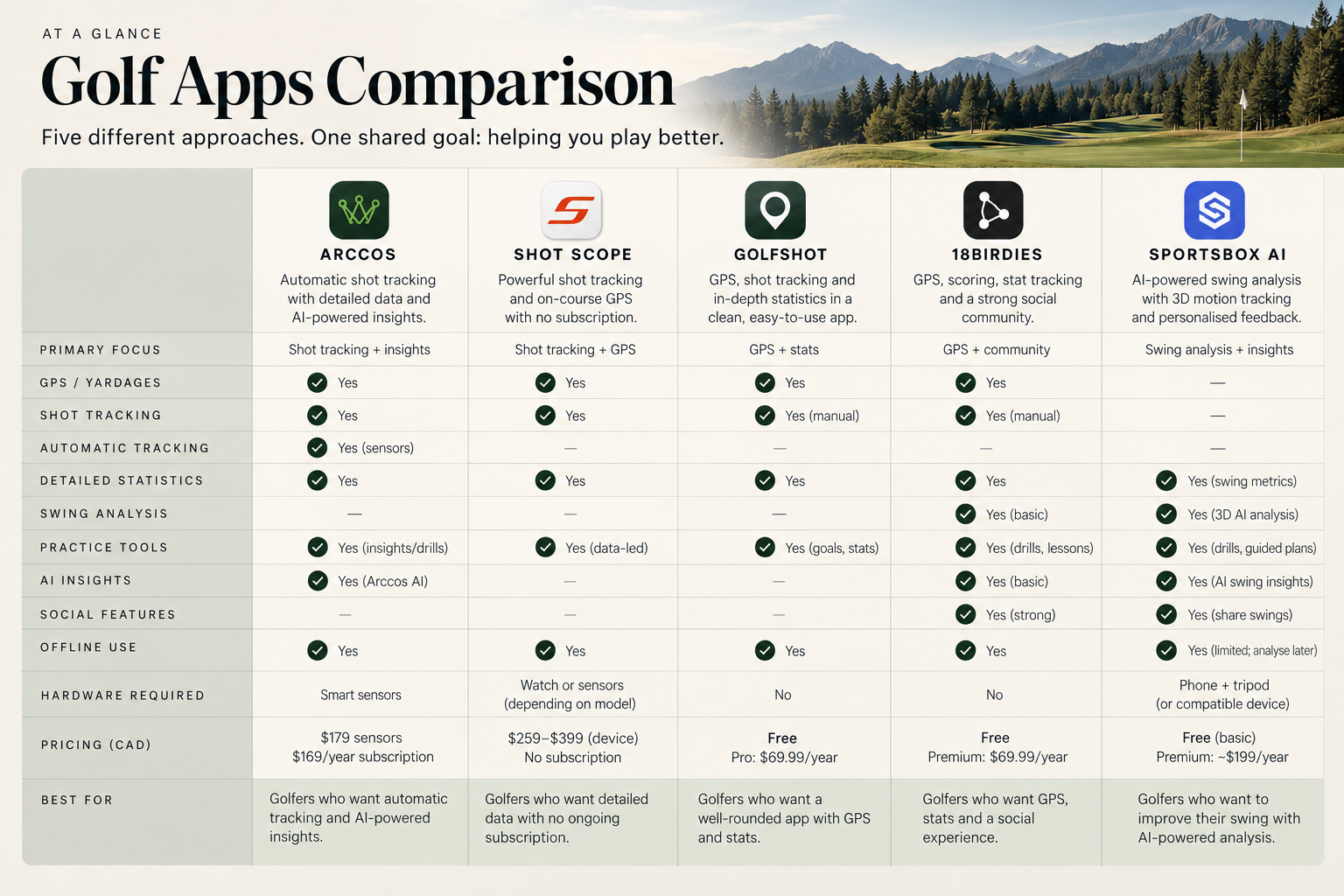
Here are five golf apps we think are worth a closer look in 2026. Each brings something different to the game, and each offers an interesting perspective on how technology might help us play better.
1. Arccos Golf — Understanding Your Actual Game
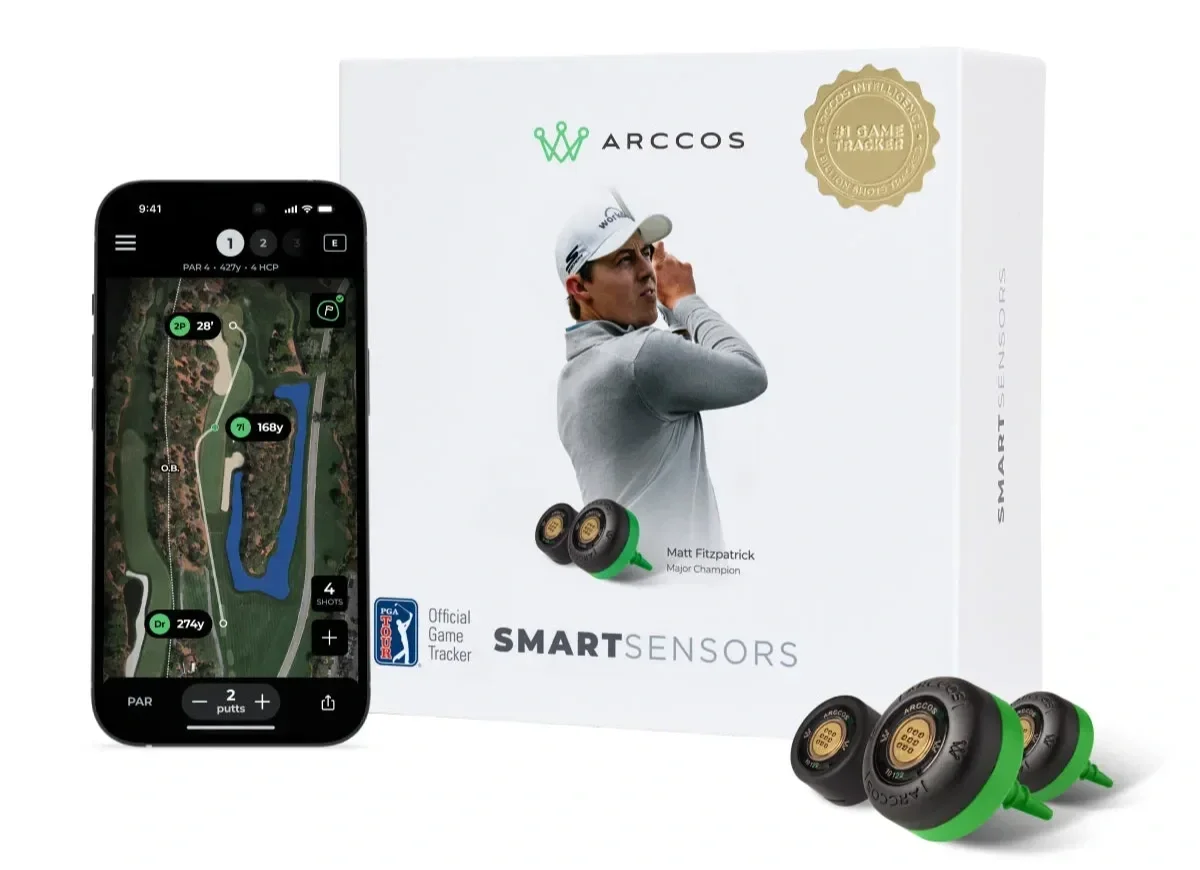
Few products have embraced performance data as completely as Arccos.
The system began with sensors attached to golf clubs, automatically recording shots and building a picture of a golfer's performance over time. The appeal is straightforward. Rather than relying on memory, Arccos collects evidence. It can show your real-world club distances, analyze performance through strokes gained and identify where you're losing ground against golfers of a similar ability.
Its newer Arccos Air wearable takes the concept further by tracking shots without requiring sensors on every club. Golfers who want more detailed club-by-club information can still add the sensors.
The interesting part isn't necessarily the technology itself. It's what happens after you've accumulated enough rounds. Imagine discovering that your 150-yard club actually travels 138 yards on average. Or that your supposedly unreliable driver is performing better than your short irons. Those are useful discoveries because they challenge assumptions.
Arccos also raises an important question about commitment.
This is a system built around accumulating data over time. The more you play, the more useful its insights may become. But it also requires hardware, an ongoing membership and a willingness to review the information.
For golfers serious about understanding their weaknesses, that investment might make sense. For someone playing six casual rounds a summer, it might be more information than they need.
The takeaway: Arccos is most compelling when you're willing to turn its findings into a deliberate practice plan.
2. 18Birdies — The Everyday Golf Companion
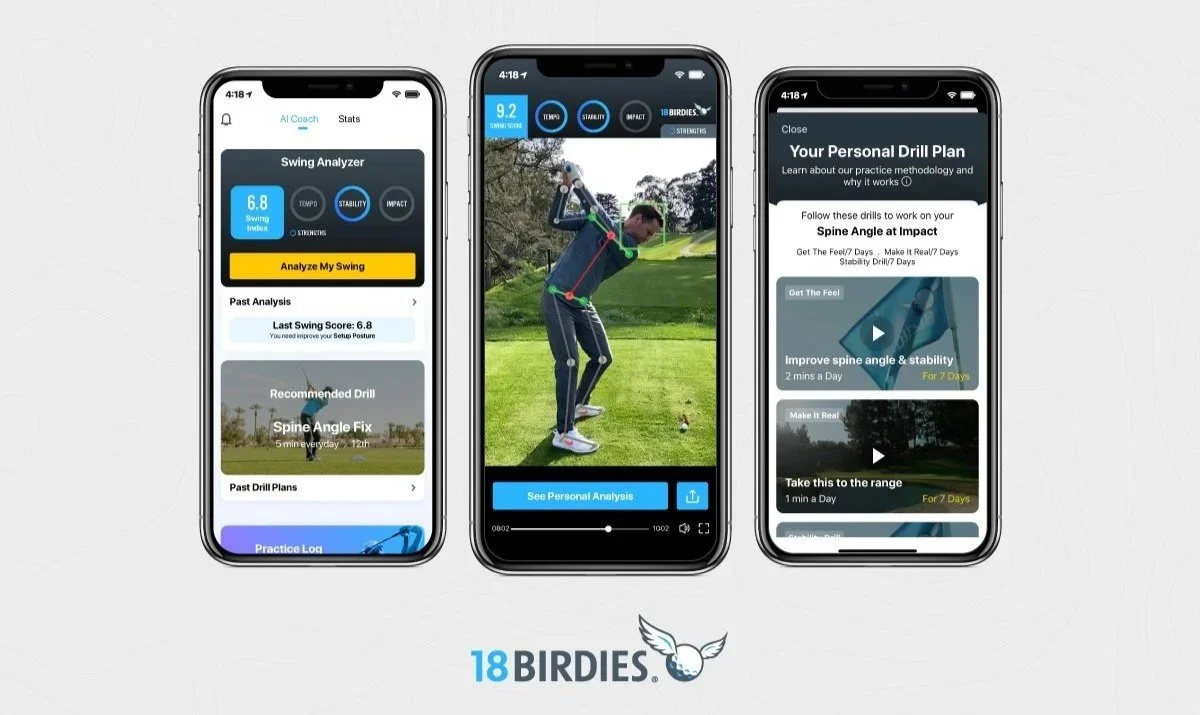
Not every golfer wants to analyze a hundred different performance metrics. Sometimes you just want to know how far it is to the green. That's part of what makes 18Birdies appealing.
At its foundation, it's a GPS and scoring app. You can look up a course, check distances, record your score and keep track of basic statistics. It also includes social features, allowing golfers to connect with friends, organize games and follow one another's rounds. For many recreational players, that combination may be enough.
But 18Birdies has also expanded into more advanced territory, with premium features that include strokes-gained statistics, course-planning tools and AI-assisted swing analysis. It's a good example of how the modern golf app is becoming an all-in-one platform. The advantage is convenience. Rather than switching between separate products for GPS, scoring, performance tracking and instruction, you can access several functions in one place.
The potential disadvantage is complexity.
There's a difference between having useful information available and feeling compelled to use every feature during a round. Golf already asks us to make plenty of decisions. Adding another screen full of options isn't necessarily an improvement.
The most attractive aspect of 18Birdies may be that golfers can start with its free GPS and scoring functions, then decide whether the additional tools are worth paying for.
The takeaway: A sensible starting point for golfers who want useful on-course technology without immediately investing in dedicated hardware.
3. Golfshot — Technology That Stays Out of the Way
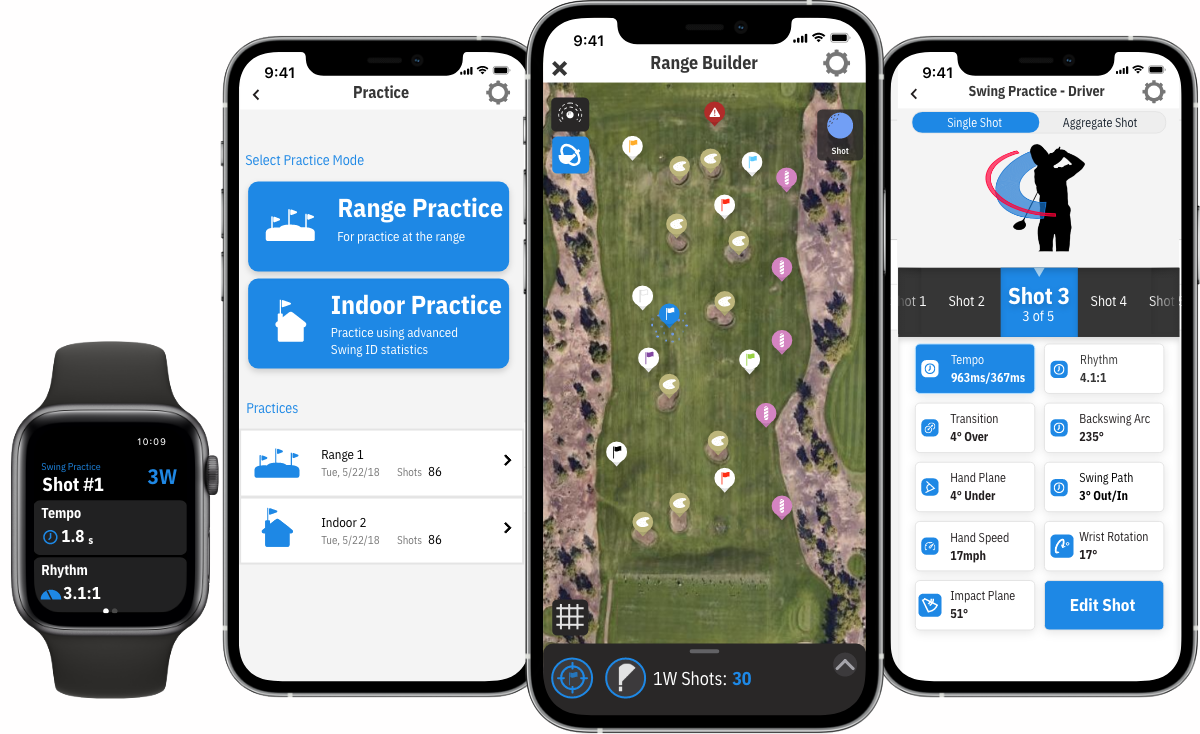
One of the more interesting developments in golf technology is the movement from the phone to the wrist. Golfshot has leaned heavily into that experience, particularly through its Apple Watch integration.
The concept is simple: glance at your wrist for distances, keep score and, with supported features, track shots automatically. You don't need to pull your phone out of your pocket every time you approach the ball.
That might sound like a minor convenience, but it addresses one of the fundamental tensions in golf technology. Most of us don't head to the course because we want to spend four hours looking at a screen. We go to play golf.
A smartwatch can provide useful information while allowing the experience to remain relatively uninterrupted. Golfshot's more advanced capabilities include automatic shot and putt tracking, club-distance information and performance statistics, although access depends on the device and subscription.
There are limitations, of course.
Not everyone owns an Apple Watch. Battery life, compatibility and premium features all matter. And golfers who prefer a traditional watch or no watch at all may find the entire approach unnecessary.
But the underlying philosophy is appealing. Good technology doesn't always need to demand our attention. Sometimes its greatest achievement is how little we notice it.
The takeaway: Particularly interesting for golfers who already own a compatible smartwatch and want GPS and tracking without constantly handling their phones.
4. Sportsbox AI — A Swing Coach in Your Pocket?
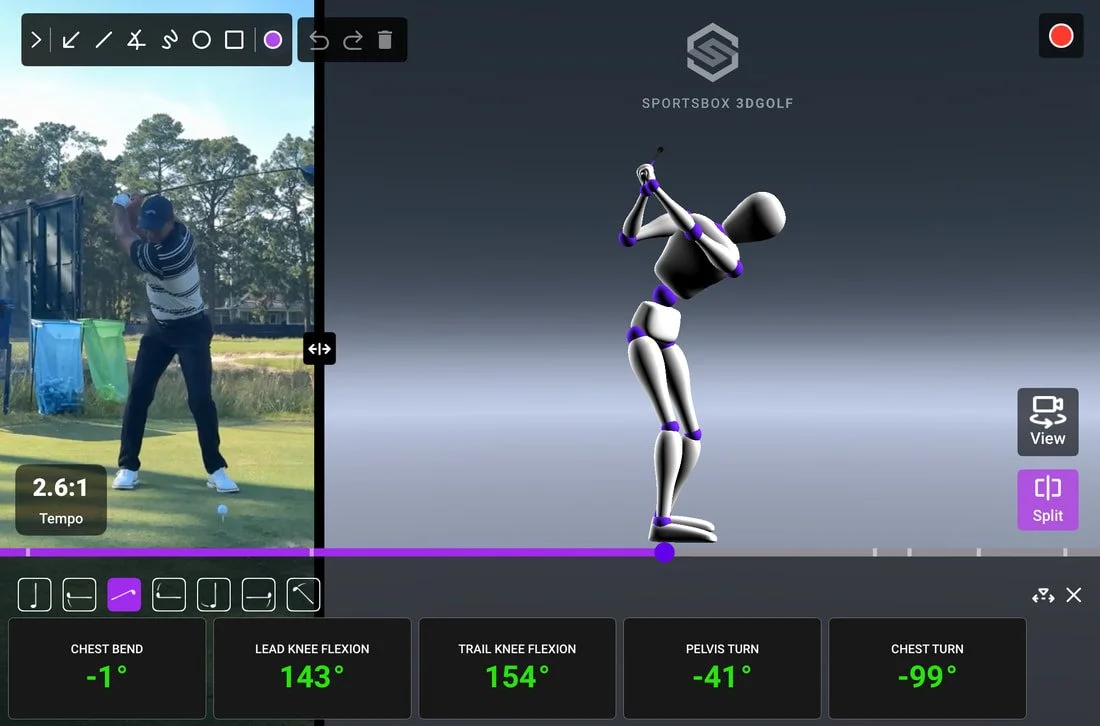
Perhaps no category of golf technology has developed more intriguingly than smartphone-based swing analysis. For years, golfers have recorded their swings on their phones. A slow-motion video can reveal plenty: posture, alignment, takeaway, tempo and obvious changes in movement.
But Sportsbox AI attempts something more sophisticated.
Using video captured on a smartphone, the software creates a three-dimensional representation of the golfer's movement and provides measurements related to body rotation, sway, tilt and other aspects of the swing. It's a remarkable concept.
Movements that once required specialized motion-capture equipment can now be estimated from ordinary video. For golfers working with an instructor, that could be especially useful.
A coach might identify a specific movement to improve. Sportsbox can then help the golfer monitor whether that movement is changing between lessons. But this is also where we should be careful about confusing measurement with instruction.
A number on a screen doesn't necessarily explain why something is happening. Two golfers can arrive at similar impact positions through very different movements. A swing characteristic that works well for one player might be problematic for another.
And there's a difference between measuring body motion and understanding the full relationship between clubface, path, strike and ball flight. The technology can provide information but interpreting that information remains the challenge.
For the recreational golfer, the danger is familiar: watching too many swing videos, identifying too many things to fix and gradually becoming less comfortable over the ball.
The most promising use of Sportsbox may not be replacing a good instructor. It may be making the time between lessons more productive.
The takeaway: An intriguing practice tool, especially when paired with qualified coaching and a clearly defined swing objective.
5. Shot Scope — The Case Against Another Subscription
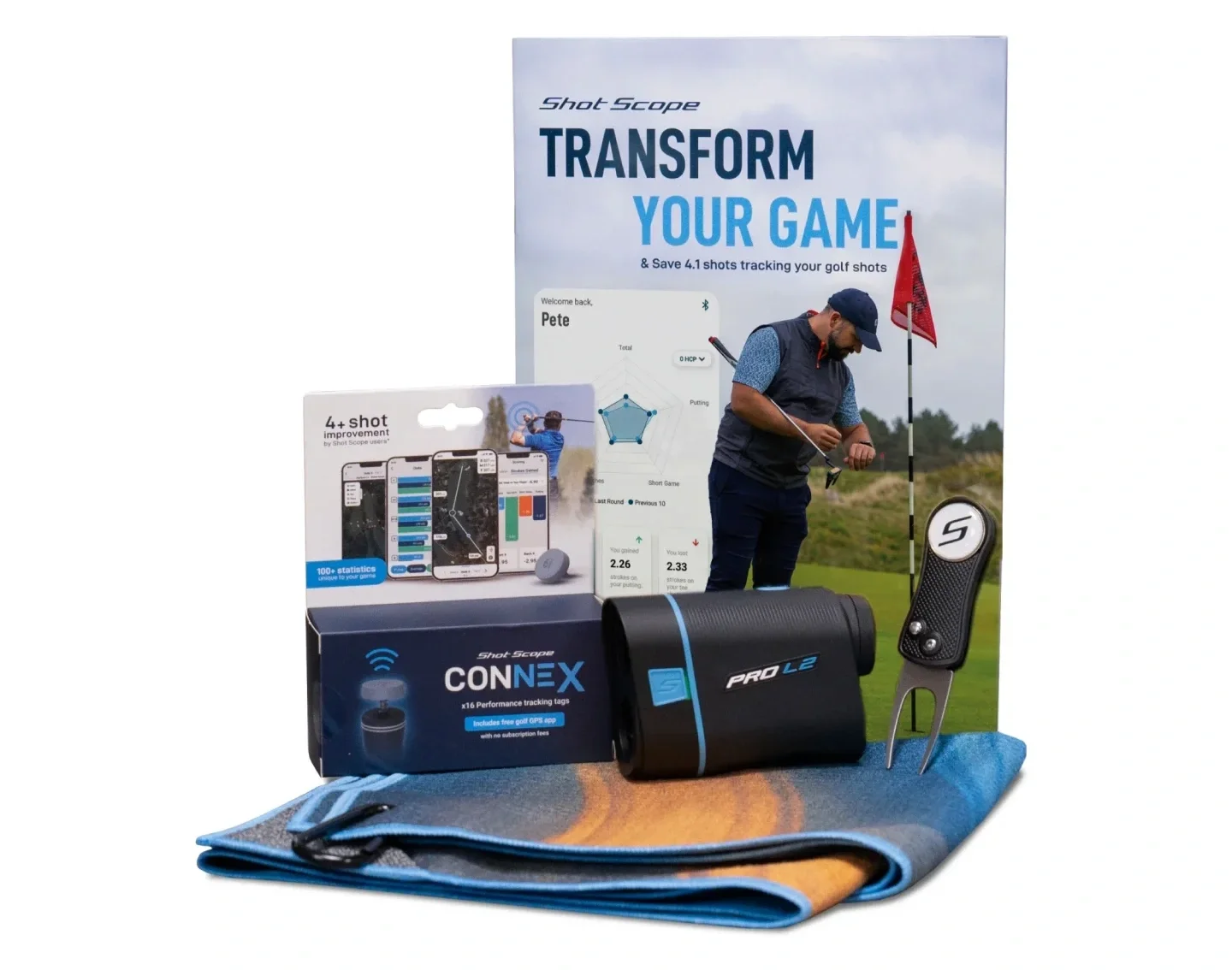
Golf equipment is expensive enough before we start adding monthly and annual subscriptions. That makes Shot Scope's approach worth examining.
The company offers GPS watches and other tracking devices that work with club tags to record shots and generate performance statistics. Like Arccos, the goal is to build a more accurate understanding of your game.
Shot Scope provides club-distance information, strokes-gained analysis and detailed scoring statistics through its app and performance dashboard.
But its distinguishing feature is the business model. Rather than requiring an ongoing subscription for its core performance statistics, Shot Scope makes those insights available without an additional membership fee after purchasing compatible hardware.
For golfers who expect to use a tracking system over several seasons, that difference can be meaningful. However, there are trade-offs. You still need the appropriate hardware, and tracking isn't entirely effortless. Depending on the device, missed shots, putting locations and other details may require correction after a round. That extra work is worth considering.
A system that collects excellent data but requires constant attention may eventually become something you stop using. Still, Shot Scope presents an attractive proposition: pay for the equipment, collect your information and use it without another annual bill.
The takeaway: A strong option for golfers who want serious performance tracking but prefer an upfront hardware purchase to a recurring subscription.
The Game Beyond the Numbers
There's never been a better time to understand your golf game. The technology is increasingly accessible, the insights are more sophisticated, and the opportunities to improve are genuinely exciting.
But the value of these tools isn't measured by how much data they collect. It's measured by what we do with it.
For some golfers, that means identifying weaknesses and building a more purposeful practice routine. For others, it's simply having accurate yardages and making smarter decisions on the course. The best investment isn't necessarily the most advanced app or expensive subscription, but the one that meaningfully improves how you play.
And there's something worth remembering in all of this.
Golf is still a game of feel, instinct, commitment, and execution. No amount of data can eliminate uncertainty or guarantee a good shot. Technology can help us prepare, understand our tendencies, and make better decisions. But eventually, we have to trust what we've learned.
The goal isn't to become better at measuring our golf games, it's to become better golfers. And sometimes, that means putting the phone away and simply playing.
