
The Shot in Front of You
A Review of Dr. Joseph Parent’s Zen Golf

You've been striking the ball beautifully on the range, the driver feels good, your irons are finding their targets and even the putter seems to be cooperating. Then you step onto the first tee.
Suddenly, there's a scorecard in your pocket, a fairway you need to find, and three other people watching. The swing that felt effortless ten minutes ago becomes something you need to think your way through. By the third hole, you're wondering what happened.
It's a familiar experience for golfers at almost every level. We spend countless hours working on the mechanics of the game, yet relatively little time learning how to manage the thoughts and emotions that accompany them.
That gap is where Dr. Joseph Parent's Zen Golf: Mastering the Mental Game comes in. Published in 2002, the book combines practical golf instruction with principles drawn from Zen Buddhism and mindfulness. Its premise is refreshingly simple: learning to manage your attention, expectations and reactions can help you make better use of the golf game you already have.
Parent's credentials extend well beyond the bookshelf. A longtime mental-game instructor on the PGA and LPGA Tours, he has worked with major champions Vijay Singh and Cristie Kerr, helping both reach world No. 1. Golf Digest has also recognized him among its leading mental-game experts.
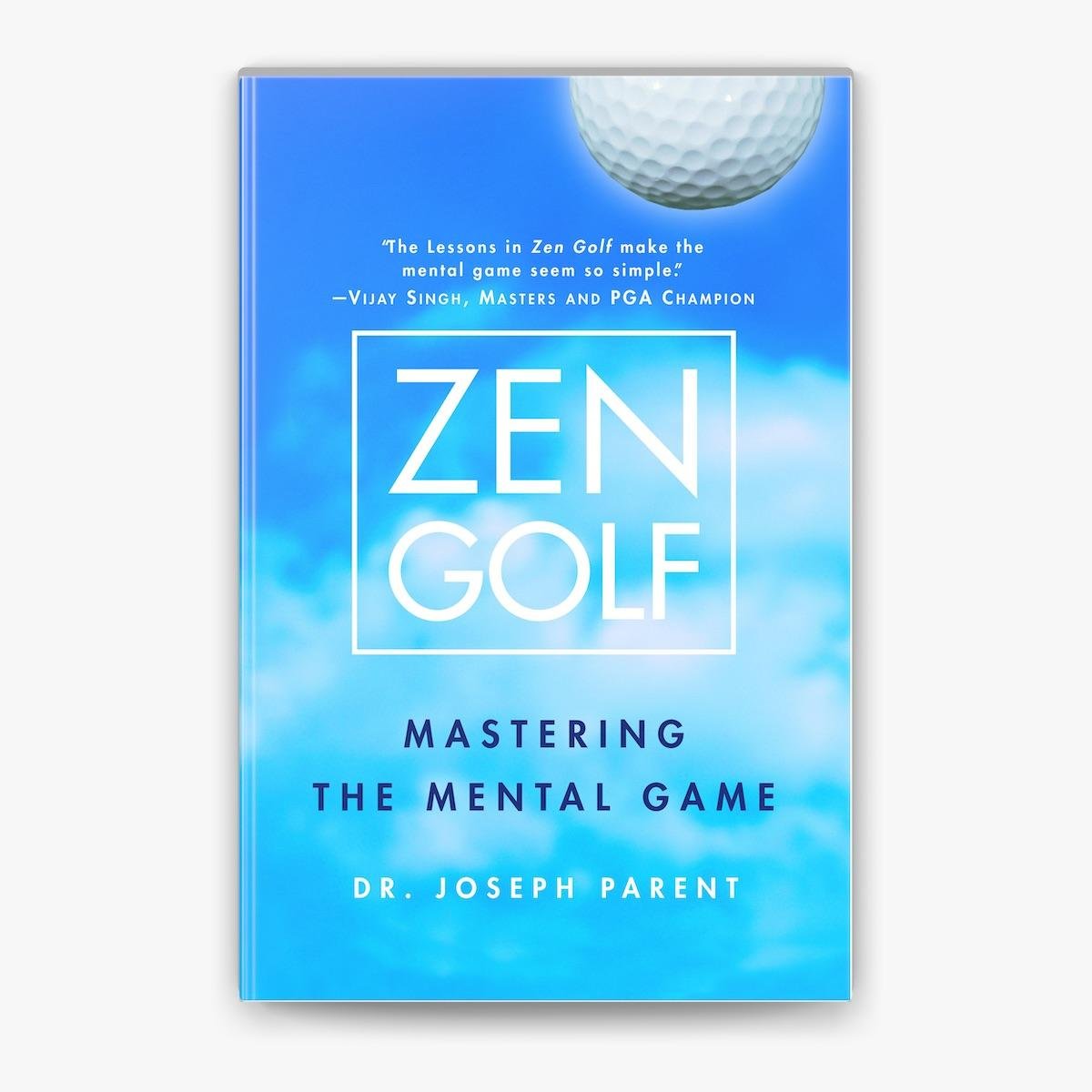
His approach is rooted in both performance psychology and Eastern mindfulness traditions.
That combination gives Zen Golf an interesting perspective. Parent isn't particularly interested in teaching you how to rebuild your backswing or find another ten yards off the tee. He's interested in what happens between deciding to hit a shot and actually hitting it. And perhaps more importantly, what happens in your mind once the ball has left the clubface.
At the centre of the book is Parent's PAR Approach: Preparation, Action and Response to Results. It's a framework designed to help golfers approach each shot with a clearer mind and respond constructively to whatever happens next.
Preparation is where you do your thinking. Assess the lie, choose the club, consider the conditions and commit to a target.
Action is where you stop thinking about the mechanics and allow yourself to make the swing.
Response to Results is where the mental game becomes particularly important.
A ball in the trees doesn't have to become three holes of frustration. A missed putt doesn't need to follow you onto the next tee. You acknowledge what happened, take whatever lesson is useful and move on. The idea sounds almost too simple. But anyone who has carried a double bogey around for the next forty minutes knows how difficult it can be to put into practice.
“The key point to remember is, take care of the process and the results will take care of themselves.”
Learning to play the shot in front of you
One of the most valuable ideas running through Zen Golf is the distinction between what we can control and what we cannot. We can control our preparation, our commitment and the attention we give to the shot. We cannot control every bounce, gust of wind or unfortunate lie.
Yet golfers have a remarkable tendency to judge the quality of a decision entirely by its outcome. A well-struck approach catches a slope and runs through the green. A poor swing finds the fairway after clipping a tree. One feels like failure, the other like success.
Parent's approach encourages golfers to pay more attention to the process that produced the shot rather than becoming consumed by the result. That doesn't mean abandoning the desire to score well. It means recognizing that the best opportunity to influence your score is the shot you're about to play—not the one you've already hit.
There's also something useful here for golfers who find themselves overwhelmed by swing thoughts. A round of golf is rarely the place to rebuild your technique. The practice range is where you work through mechanics. On the course, you need to trust the work you've done and give yourself permission to play. It's a distinction that can make the walk from the range to the first tee feel considerably less intimidating.
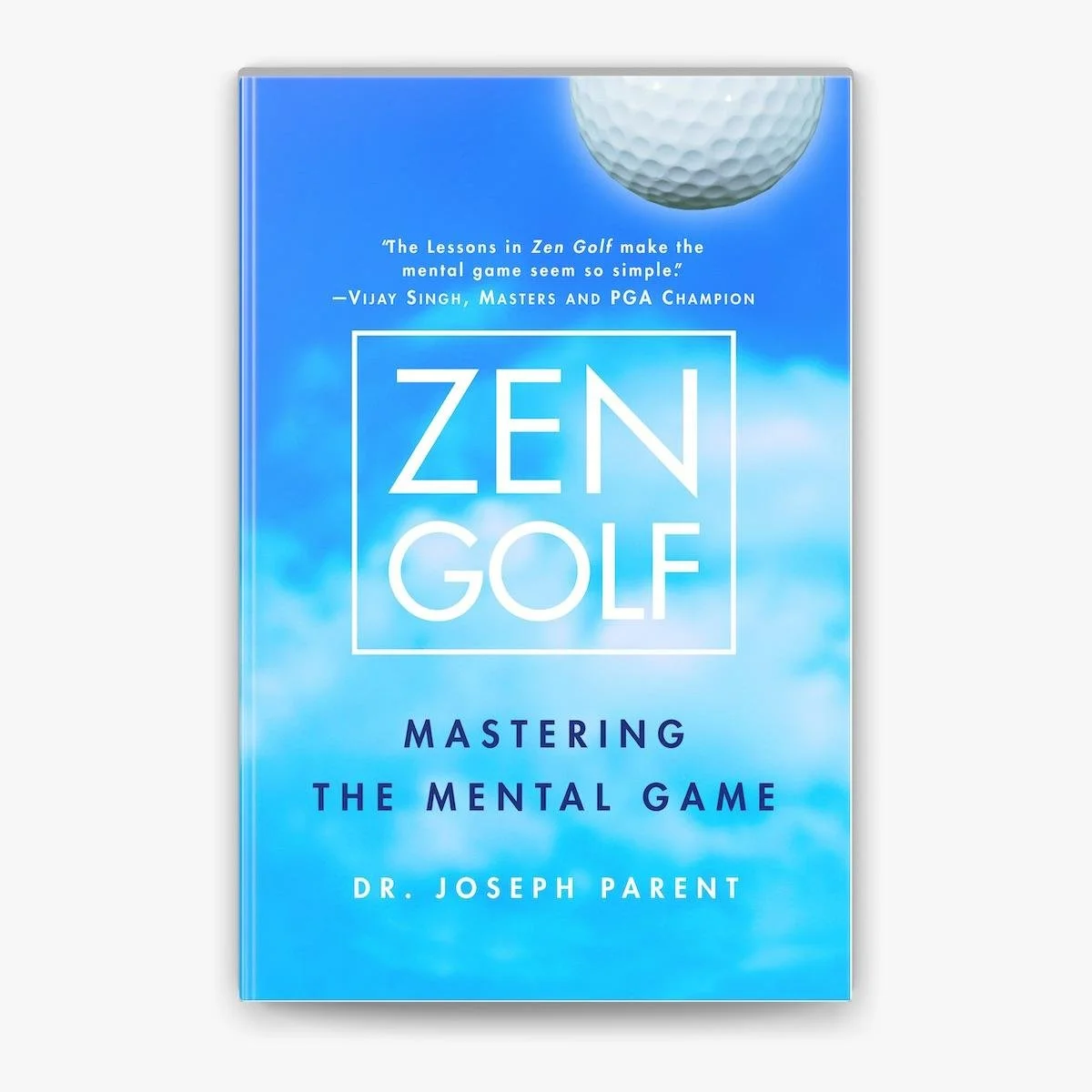
The Reading List
Zen Golf: Mastering the Mental Game by Dr. Joseph Parent
A practical introduction to the mental side of golf, combining mindfulness, pre-shot preparation and a healthier relationship with results.
Better golf, and a better afternoon
Perhaps the most appealing thing about Zen Golf is that its lessons aren't just about lowering your handicap, they're also about enjoying the game.
A golfer who can recover mentally from a bad shot has a better opportunity to make a good one next. But they're also more likely to enjoy the walk, the company and the afternoon itself. And for those of us playing golf in the Pacific Northwest, that's worth remembering. There are worse places to spend four hours than walking through the trees with a few friends, even when the scorecard isn't cooperating.
The book doesn't promise that mindfulness will eliminate bad shots. It offers a way to keep those shots from taking over the entire experience and that may be one of the more useful improvements a golfer can make.
Zen Golf is approachable without feeling superficial. Its short lessons and stories make it something you can read in small stretches rather than needing to work through in one sitting. It's particularly relevant for golfers who practise regularly but struggle to bring that performance onto the course, players who become overly attached to their scores, or anyone who has difficulty leaving a bad hole behind.
You won't finish it with a new swing. But you may finish it with a better understanding of why the swing you already have sometimes disappears when it matters.
